
Michelle De Highden
The power of networking and systems thinking
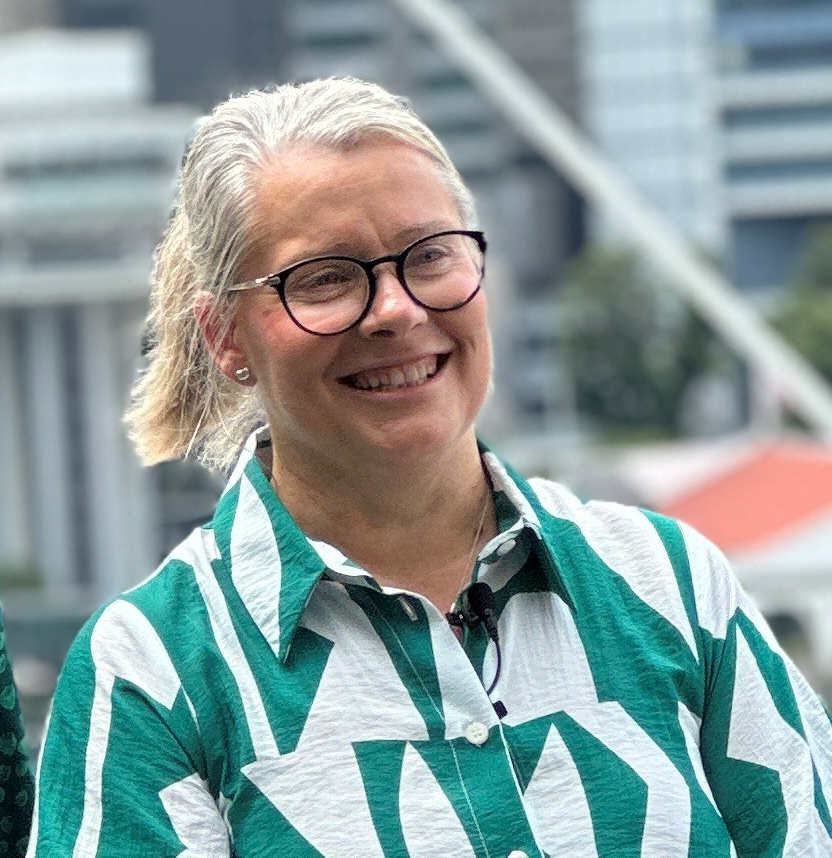
Michelle is the HP Coach Development lead at the Australian Institue of Sport.
With more than 35 years of experience, Michelle has coached at both development and World Championship level. She completed a Master of Sport Coaching in 2021 and the ICCE/NSSU Coach Developer Academy in Japan in 2020, drawing on both to incorporate global best practice into the design of national and international coach development programs.
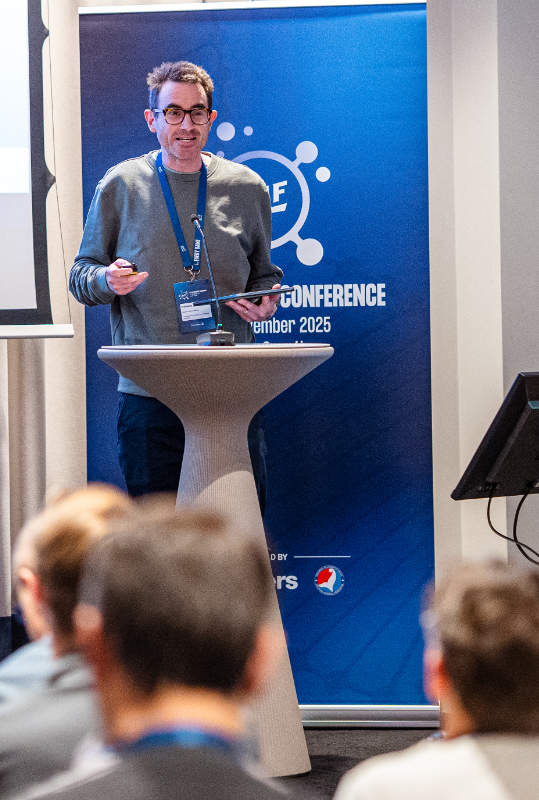
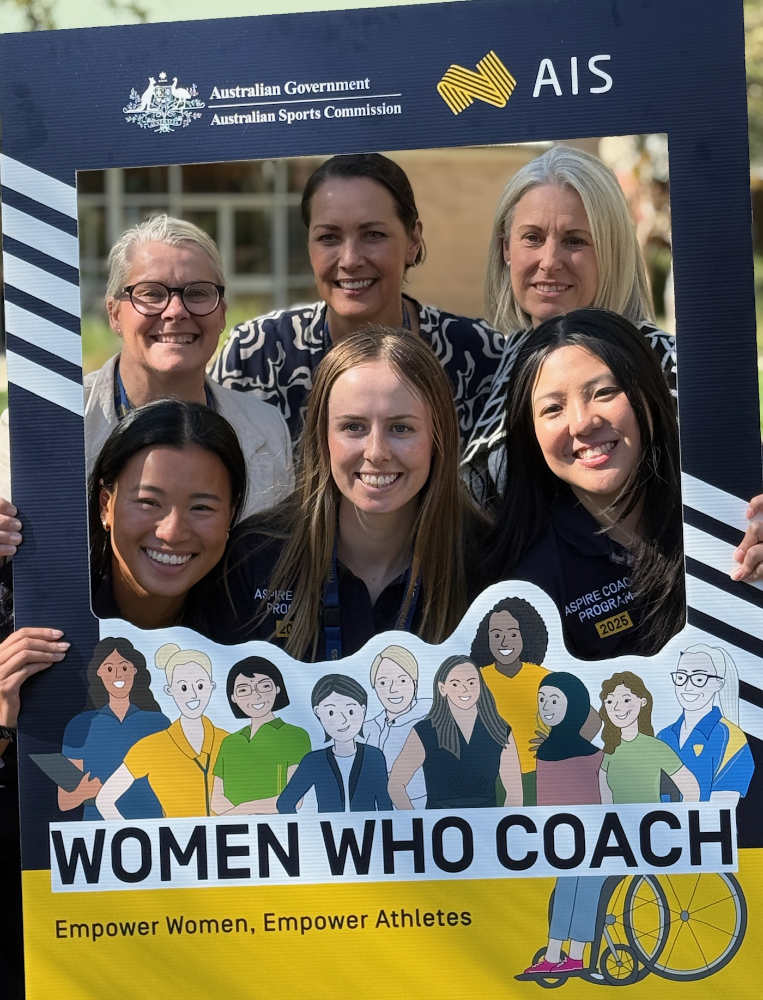
Michelle leads the AIS Women in High Performance Coaching (WiHPC) project, which addresses the underrepresentation of women in high-performance coaching and works to improve their experiences in the system. This work has received international recognition. In 2023, she was a keynote speaker at the Global Coach Conference in Singapore, and in 2025 she presented major sessions and workshops at the Athens Conference.
The AIS also collaborated with Sport Ireland to support INSEP by delivering a Women in Performance program over four months. Funded by Erasmus, this included a Women in Performance Conference at INSEP in France and a five-day workshop at the AIS European Training Centre in Italy.
Michelle is an experienced high-performance coach and coach development facilitator, passionate about optimising coach development at the high-performance level, particularly for underrepresented groups.
Michelle’s work is characterised by close attention to detail while maintaining a clear view of the bigger picture. Much of her work at the AIS and with international partners has focused on improving systems that attract, develop and celebrate women in coaching. This has involved bringing together NSOs, coach development managers, coach developers and coaches.
One of Michelle’s key strengths is building and strengthening networks that help others grow and succeed.
How did you get into the coach developer role?
I think I’ve always developed coaches. I started coaching as a 16-year-old, and when I turned, 17, we moved to the middle of Queensland, where I ran a club. I led the club with my mum, and then I dragged my brother in. From that time on I have always supported the development of others, whether it was through mentoring, or whether it’s through coaching courses.
The longest time I spent at a program was my time at MLC Gymnastics Club in Victoria, where I was the manager, the director, the head coach, the leader. A key role in all of that was mentoring and supporting the development of our workforce. I have had an equally long role on committees having volunteered my time to committees for both the Queensland and Victorian associations.
It wasn’t until Christine Nash interviewed (1) me that I recalled that one of my very first independent studies for my university degree was to look at coach education. So, the interest was there from the word go.
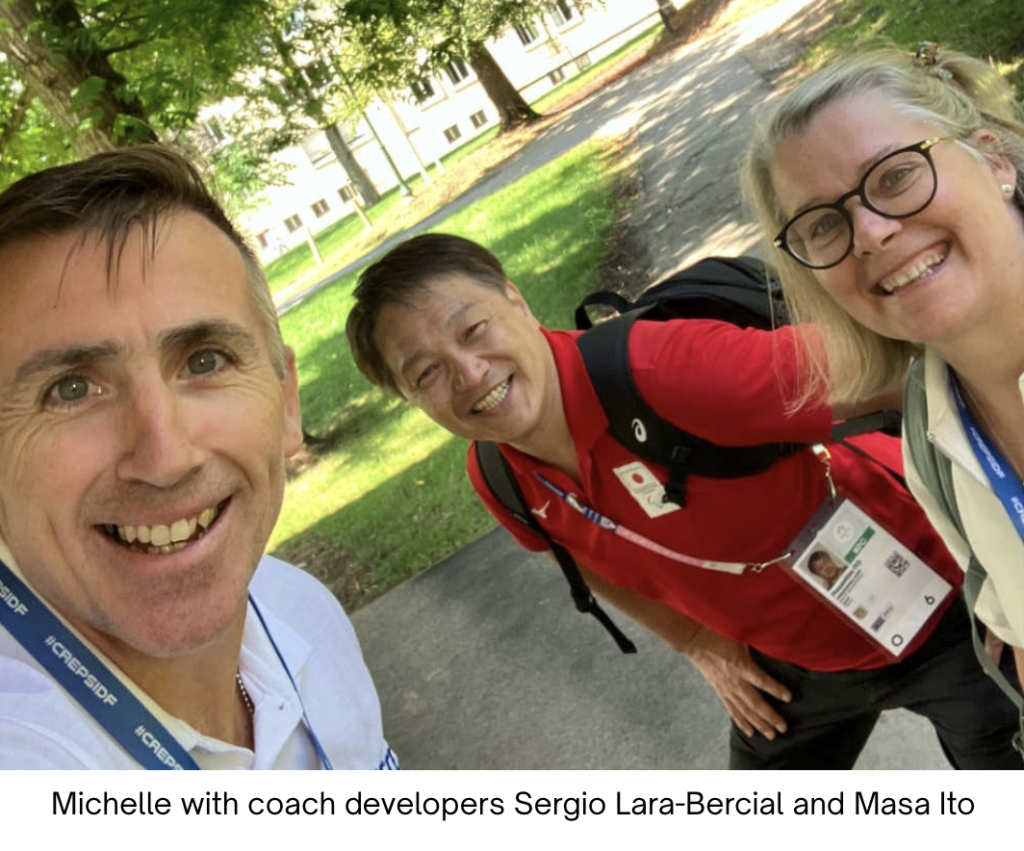
There were a couple of pivot points in the latter part of my coaching career that elevated my role in coach development. One pivot point was attending the International Council of Coaching Excellence (ICCE) Coach Developer Academy in Japan. Another was stepping into the high-performance coach development manager role at Gymnastics Australia. So, I think there was a graduated investment to coach development becoming my primary focus. This has culminated in my current position as a senior lead in coach development at the AIS.
National Coach Developer Academy (Tokyo)
Joining Cohort 6 of the ICCE / National Coach Developer Academy (NCDA) in Tokyo I think that was real pivot point in my career in the sense that I found a place, I found my people, if you like. I found a place where there were people doing similar things in a completely different context but were invested in the work that I really enjoy, and to which I felt I could provide a lot of value to. It came at just the right time in my career.
I had the pleasure of presenting a keynote at the ICCE 14th Global Coach Conference (GCC) in Singapore and presenting again at the 15th GCC in Athens in 2025. I can link these experiences as a presenter back to my participation in Cohort 6 of the NCDA in Tokyo.
Masters degree in HP coaching
Going back to study at the University of Queensland to do my Masters was another important step in my development.
That provided me an opportunity to reflect deeply on what I’d learned through experience. Doing my Masters in High Performance Coaching enabled me to put a framework around the concepts I’d learnt on the job through 35 years of coaching.
When you spend your life being a coach, it is easy to undersell or underrepresent what we’ve learned on the job, because it’s hard to quantify. The study challenged me to think differently. It definitely was quite instrumental in my development.
Evolution of a coach developer philosophy
Early on I think I did a lot of things without understanding why I did them. My philosophy as it relates to coach development has evolved.
I think the number one pillar of my philosophy is to build relationships. I know I thrive on building relationships and connections and conversations with others. I’d much rather collaborate with someone than do it by myself.
As relationships build, a network of friends and colleagues follows. Building the network needs to be intentional and requires an investment of time.
Supporting learners how to learn is critical. So, I think there’s two parts to that:
- Fostering their curiosity and lifelong learning
- And supporting them by building a scaffold that can be removed as the coach moves towards their goal.
These are important as they highlight a problem in some coach development that I see. That is too little emphasis is placed on building self-reliance. This applies to programs as it does to individuals, whether they are coaches or athletes. If coaches and athletes can seek out their own learning and make their own decisions, they’re going to be far better off for it.
The fourth and final thing to consider when helping others is the importance of your own lived experience. Reflecting and looking through this lens of lived experience enables you to access many relevant experiences and stories.
Experiences that have shaped your role as a coach developer
I have been a high-performance coach, but I started at grassroots. One thing that always sits with me whether it’s designing a new program, or whether it’s looking at something to support others, is what would the 16-year-old Michelle in the middle of Queensland, running a club by herself need? Whilst I coached at the highest level my ability to reflect back to where I started always grounds me.
I think that’s really important. I was never a national team athlete myself. But I started coaching very early. I was very deliberate in doing the degree that I did and combining teaching with it. I could very easily have just done the undergrad degree and focused on human movement, but human movement education was done intentionally to make me a better coach, because that’s what I wanted to do.
The last thing which has really evolved over the last four years is the work I have done in designing programs and frameworks. This has helped me take a systems approach to my work. Whether it is a program or a coach I am always eager to see how they interplay with the ecosystem in which they work and how this interplay can be optimised.
What do you enjoy most about the role?
When I was coaching and running a club there was too much going on for me to really enjoy it. One thing though that gave me a lot of satisfaction was to use my creative thinking to come up with innovative solutions.
In my current work I get a lot of satisfaction from exploring how an initiative will play out at the system level and thinking about how we might influence others to support this way of thinking. The other side of that is being challenged personally to think differently. I don’t have all the answers.
How has your one-to-one relationship with others changed?
In my current role, one-on-one interactions look really different to what they did five years ago. Going back ten years I felt a responsibility to have all the answers. My current role is less focussed on one-to-one relationships.
Running workshops with others I am part of a wider conversation with others, aimed at encouraging the investment of women coaches in their own growth. Six months down the track I am able to follow up on the progress of individuals.
An important part of my role involves working with coach developers, coach development leaders and facilitators. I am able to see in action the impact of workshops we have run for these people and provide additional support or scaffolding as requested. This approach is very much reliant on the individuals stepping in and taking greater responsibility for their own development.
What does coach support look like in HP sport?
The key is helping those who are in the closest circle of influence with the coach. For example, pathway managers.
An important initiative in the last four years has been helping coaches with individual coach development plans with the assistance of resources we have developed. That has involved up skilling and building the capability of people to assist coaches with their plans but to do that in a collaborative way because the coach has to own their own plan.
This bespoke approach to supporting coaches is respectful of what they have already learned. It’s not about re-teaching them what they already know but rather challenging them so they own the solution.
Not every coach is in a HP Institute or National Program. Many are in clubs. This is where we circle back to the systems approach and the need to support the organisations who employ the coaches.
Differences in developing HP coaches and community coaches
The context is very different when comparing performance coaches and community coaches. The approach to working with the two groups is different. Coaches in a HP setting work longer hours and are likely to have more support . There are commonalities too. The importance of building connections and networks is just as important to both groups. The common theme for both groups is they are still developing coaches. As I said previously, helping coaches to become independent problem solvers is relevant to all coaches.
One thing that stood out in one piece of research we did, is that coach development facilitators and leaders are just as lonely as high-performance coaches. Hence the importance of a network. To foster ways in which they can connect we built a platform so individuals can share their resources with other coach developers who are encouraged to follow up with their peers for more information. We have been successful in promoting dialogues across different sports and getting people to step out of their own bubbles.
Please expand on your international work
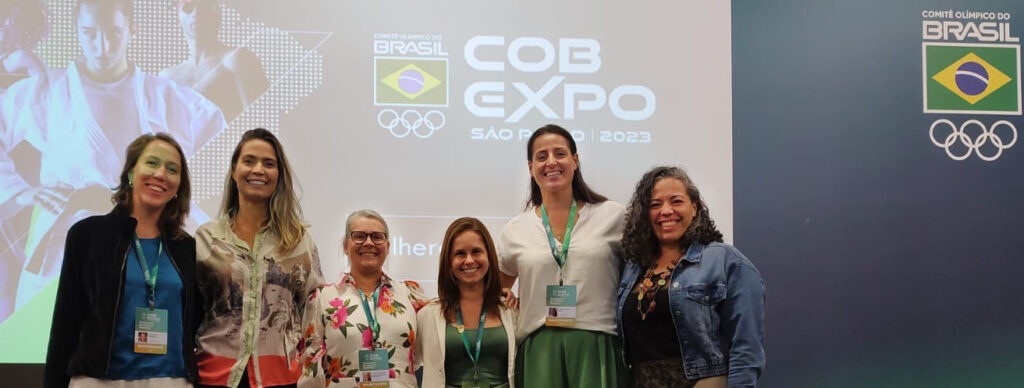
One very interesting piece of work evolved out of happenstance. This involved the AIS European Training Centre and an Erasmus grant. It was a joint project connecting the AIS with INSEP and Sport Ireland.
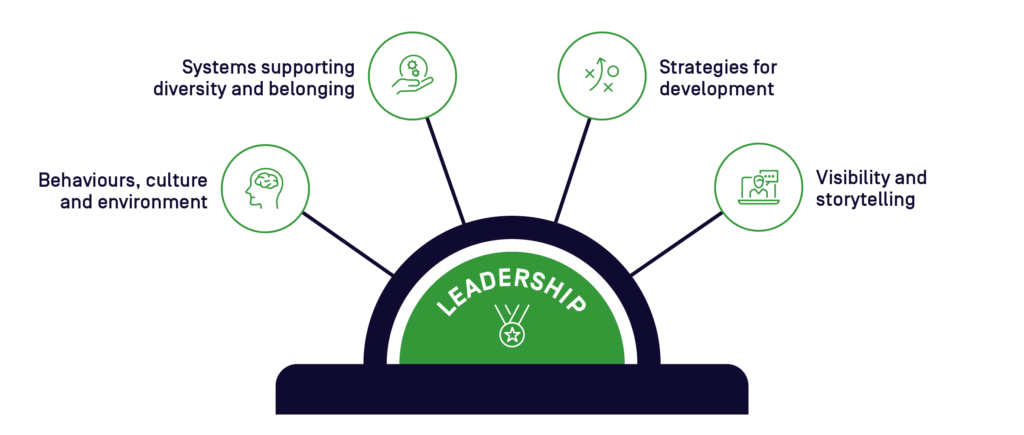
We utilised the insights from Women in HP Coaching Leaky Pipeline Action Plan and utilised the four strategic levers to build a week-long program to support INSEP with their gender equity programs.
The project evolved into a three-way partnership, an international conference and the hosting of 25 people at the AIS European Training Centre in Varese in Italy.
This was an excellent opportunity for me to connect with leading researchers and people driving change in the same space I am working in. Events like this keep prompting my own thinking.
The Women in HP Coaching Program (WiHPC) initiative has targeted system change with representation and experience of women coaching within the HP system in Australia. We have more than doubled the number of women in head coach leadership roles in Australia. While several significant factors have contributed to this result, an important factor has been shifting several things at a system level. It is hard to measure impact at an individual level, but the overall result is definitely in the right direction.
The system is layered. There are gaps between the board chair, the CEO and the coach in the field. That potentially means a big gap between the decision makers and HP coaches. How do we bridge that gap? An approach we have taken is to help leaders, managers and decision makers understand what the lived experience looks like. Leadership underpins the four strategic levers and the ability to nudge the system.
Do you have a mentor?
I would consider you as one of my mentors Gene. It’s interesting. We support others in their growth but we don’t necessarily seek that support for ourselves. In the last 12 to 18 months, I consider I’m at a point where I think peer support from others is really important to me. Someone who will challenge me and my thinking – particularly in the work I do.
I have a lot of people I connect with. Bob Crudginton is one. He was a National Team Coach for Softball and has been a HP manager for several sports as well as an ICCE/NCDA accredited coach developer.
My need for a mentor has evolved. In the last few years, I have reached out to peers because often a mentor we see as someone who is the keeper of knowledge. So, I deliberately developed a network. People like Helene Wilson at HP Sport New Zealand.
There are several others, so I think what I’ve developed is a network of peers. And I think I’ve been able to utilise them to support the work I’ve done and myself personally. But I probably still do need to have someone, who is a trusted friend to really challenge and, help question the pieces that maybe I’m not questioning myself on.
TOP 6 COACH DEV TIPS
- Intentionally build your own network. Own it, and build it, and invest in it.
- It’s a journey, and not every conversation, session, program may have an immediate outcome, but what you might do is sow and plant some seeds for the future. So, recognise that if you’re an outcome focused person, you might want to walk away with something, but actually it’s okay not to.
- Aim to be a lifelong learner. And if you go about that the right way, be curious and learn to ask the right questions. That takes experience but also understand who does the question belong to. Am I asking a question because I want to know something, or am I asking the question because that’s going to help others think more deeply?
- Model what you say. So, if you’re advocating that others become lifelong learners, then you need to do what you are suggesting others do.
- Be clear that not every problem is yours to solve. Particularly the personal problems of others.
- And the last one is ‘think systems’. No one operates alone. Everyone is part of a system, whether it’s a club or a team or a sport. So, what is the ripple in and out? How do the parts interact and affect each other?
Reference
Nash, Christine. (2023). Developing Sport Coaches. Routledge.